


WAMfest celebrates International Women’s Day 2026
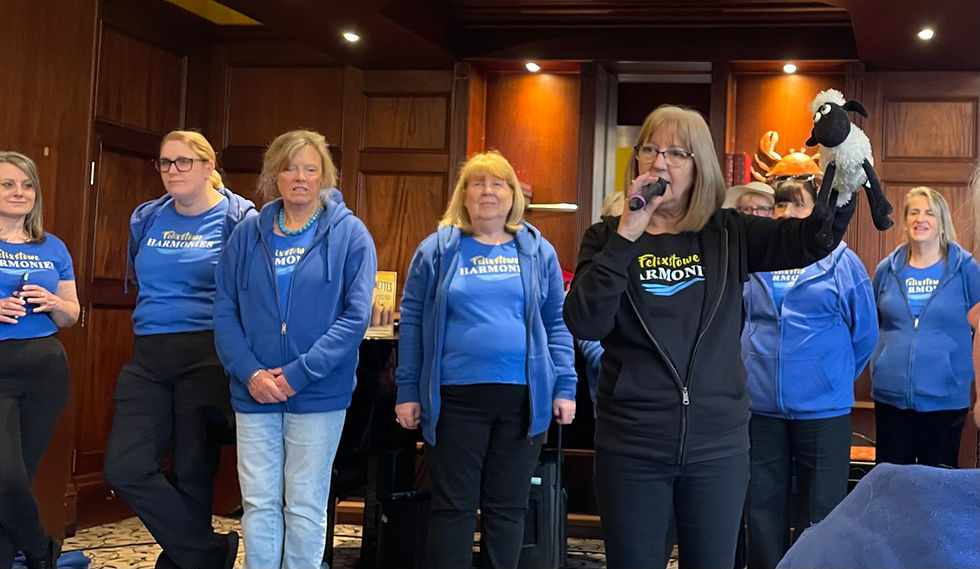
Early on Sunday March 8 Felixstowe’s landmarks were reduced to grey silhouettes, and fog hung about us. Committee members, Gill, Dee and I braved the damp, dull morning and entered the welcoming embrace of The Orwell Hotel. We followed the laughter and found a room filled with women dressed in blue and black enjoying a warming drink and chatting enthusiastically amongst themselves. Felixstowe Harmonies were getting ready to start the proceedings by singing the first public airing of ‘The Magic of Felixstowe’, written with Chandra Grover.
The central aim of the extensive and varied WAMfest 2026 programme was to champion Women in Arts and Music, and to celebrate International Women’s Day with live music, literature and performance from dozens of talented women. The choir certainly did not hold back, their voices shone the spotlight on all things Felixstowe and had us all rocking in our seats, and so the day began.
Next, we learned about the successes and difficulties of women writers, as Jackie Carreira hosted Elske Höweler, J. D. Missen, Trilby Black, Helen Fisher and Rachel Churcher. For some the label ‘woman author’ felt patronising and restrictive, being categorised by gender. Men working from home were taken more seriously. Several shared that their writing is not always seen as real work, just at home all day ‘indulging’ in their hobbies. Almost all admitted to saying ‘yes’ to interruptions, rather than declaring that, ‘no they were working’.
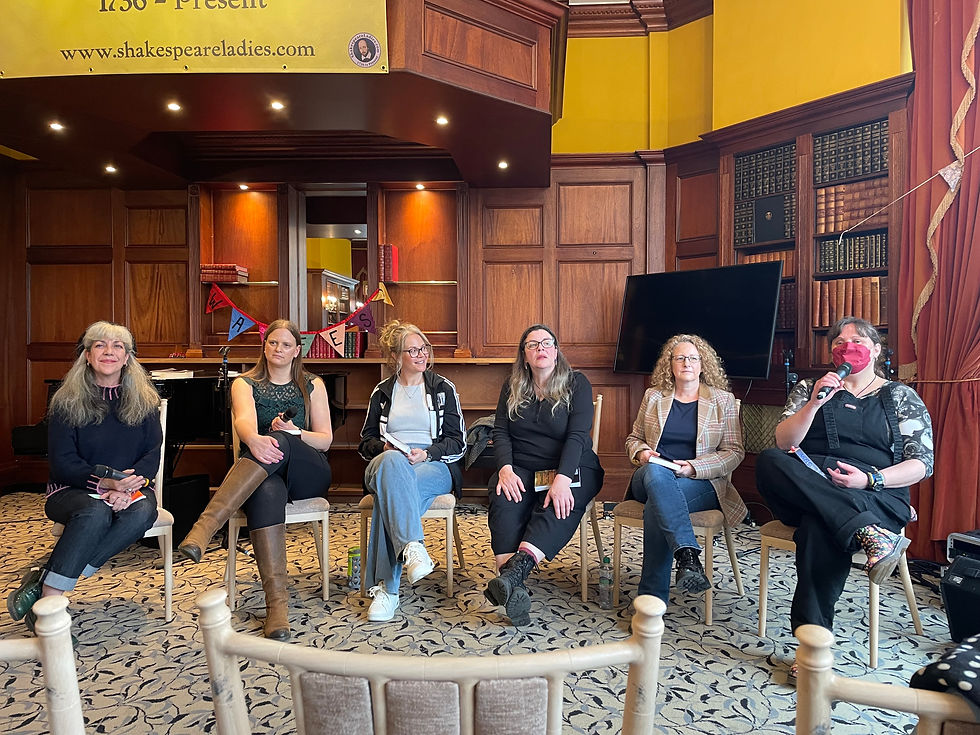
Jackie asked whether women can truly get under the skin of a ghost, horror story, crime or thriller. There was some reluctant agreement, but in Rachel’s experience of writing for young adults, some parents and older readers had assumed that the writing was ‘safe’ and less threatening, without realising that the female writer was exploring explicit issues of sex, abuse and violence.
They fear that writing is becoming an elitist profession with many writers earning below the national living wage and they were enthusiastic about an Irish initiative allowing bona-fide writers to apply for a Universal Basic Income Grant. Knowing that they could pay their bills would be a positive incentive to keep on writing. Helen shared how she had been invited to events where she had to pay her own way, even providing free books, and Jackie once had to pay to see her own play. But they were quick to commend the organisers of WAMfest who were paying them all a fee. Despite the barriers, they have all achieved success in their writing and the audience enjoyed this WAMJAM, a tribute to the talent, skill, professionalism and tenacity of all the ‘jammers’.
Lunch time recitals by Gemma Smith and Sally Jacobs kept us delightfully entertained. The opportunity to explore the stories and achievements of two more women authors and their contribution to the literary world followed. Liz Rastrick interviewed Sally Harris, author of Haverscroft and Seahurst, whilst Laura Locke, the event organiser, was in conversation with Sandra Gold-Wood about her book The Munitionettes: the Canary Girls of the Great War.

We enjoyed hearing the voices of two students from the University of Suffolk, Amy on the Masters’ and Molly working towards a PhD in Creative writing. Hosted by Dr Amanda Hodgkinson, they explored their writing lives, highlighting the importance of writing communities and how a sense of ‘place’ shaped their acclaimed anthology series. Their responses and enthusiasm would without doubt encourage other young women to similarly explore their creative writing dreams.
In conjunction with WAMfest, Amanda launched a writing competition for young women aged 16-21 living in the IP11 district.
Hence the day which commenced with the launch of ‘The Magic of Felixstowe’ ended on another positive note with the offer of a prize for young female writers, the fog had not lifted but we departed in high spirits. WAMfest had certainly put Felixstowe on the International Women’s Day map.
Sue Blything-Smith
Comments