


The Legacy of Hamnet: a comparison between the book and the film
Shakespeare has often sent shivers down the spines of students and adults alike, not everybody is born enjoying Shakespeare’s work or feeling that they understand it. With the story of Hamnet, this knowledge isn’t required for the focus is entirely on the titular character’s impact and legacy, following him far after his death.

The Book
Hamnet written by Maggie O’Farrell was published originally in 2020 and is a historical fiction taking some elements of Shakespeare’s family life, and adding flourishes. Farrell’s beautifully emotive writing takes the reader through the journey of Hamnet (the name is interchangeable with Hamlet but is known in the book as the prior) and his mother Agnes who is more commonly known as Anne but as O’Farrell highlights in her author notes, she was named Agnes in her father’s will and this was the deciding factor in choosing that to be her name in the novel.
I found this book to be completely compelling and fell in love with Farrell’s writing style; she doesn’t name Shakespeare throughout the entire book, keeping the focus on Hamnet and Agnes as it is their story. In this book, Agnes is the playwright of the story. We see her history, her life: childhood, marriage, motherhood, and her love and passion for nature. As well as this, we see her pains and torments: her abusive childhood, her fear for her children’s safety, the deadly dangers of pestilence, and how humans cannot control the strings of fate. But we also see the story from Hamnet’s point of view, and as his legacy: a play named after him following his death. This book is mostly fictional, with not much known about Shakespeare’s family or even how Hamnet died, Farrell took some liberties with the story but based as much as she could on the facts she learnt.
I will say, I did expect to be a bit more emotionally impacted by the book as it has been built up as a tearjerker, whilst it was beautifully written, I did not cry (which is a surprising one for me, as I am an emotional reader!), but I did enjoy reading the book whilst listening to the movie’s score. I felt that the idea of legacy carried through this book tremendously, the idea of family and leaving something behind (the plague/pestilence hopping scene particularly sticking out to me), and remembrance. Clearly, it was a large point of the novel, as the last lines are spoken by Hamlet’s actor on stage saying: ‘Remember me.’
The Film
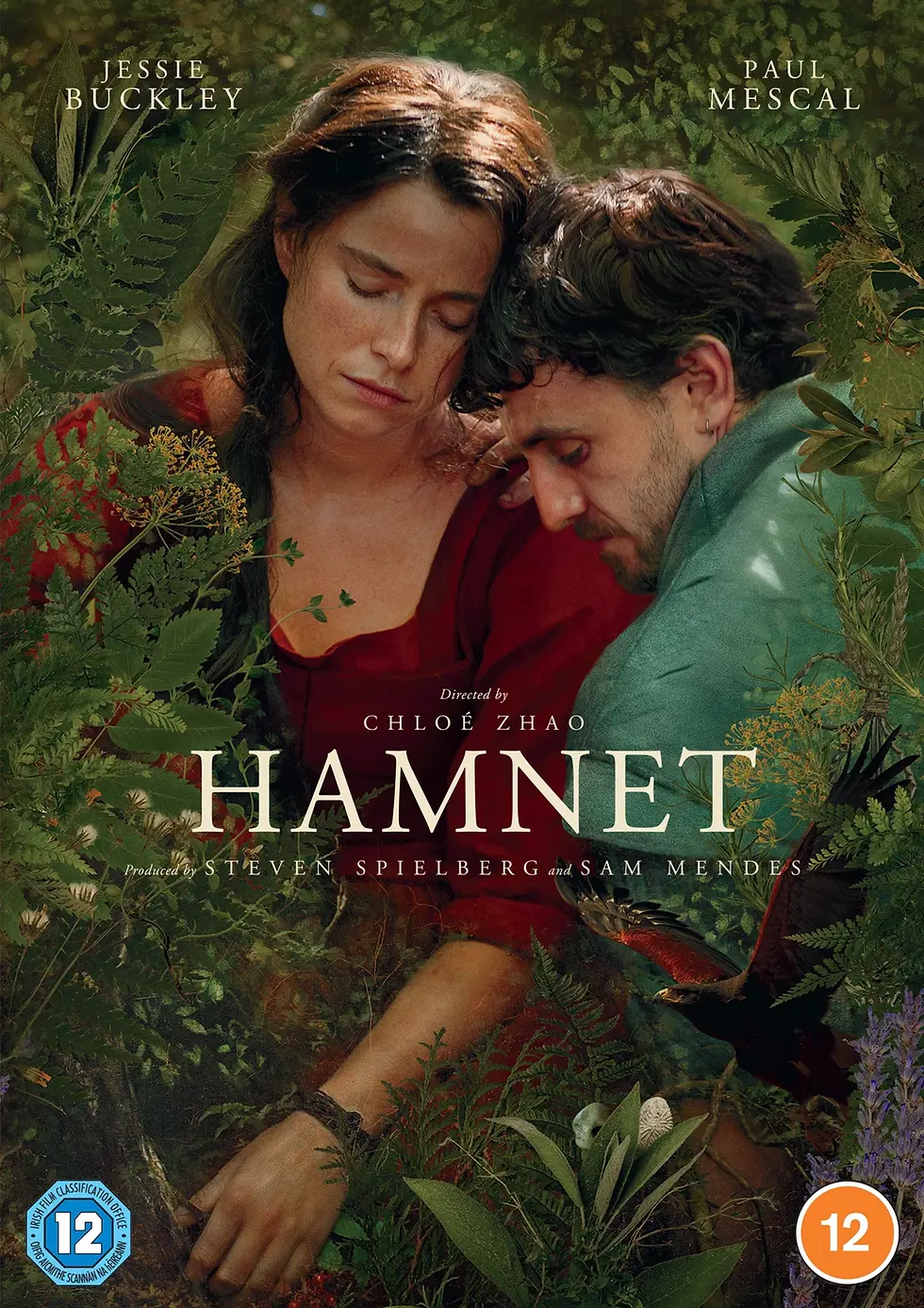
Unlike the book, the film is shot in chronological order, which emphasises the importance of time and legacy, especially motherhood and passing on knowledge. Connection to nature, animals, and herb healing, are some things Agnes (played by Jessie Buckley) was taught by her mother. This itself becomes a form of legacy, being passed down to her own children. The soundtrack and cinematography also elucidates the grief O’Farrell creates in the novel, the overwhelming sense of hollowness in the passing of Hamnet. With scenes focusing on cavernous spaces like caves, gnarly trees and puddles, director Chloé Zhao establishes the film’s tone. This reflects Agnes’ connection with nature and maternity as a form of legacy.
Shakespeare (played by Paul Mescal) plays a larger role in the film adaptation as, unlike in the book, he is mentioned by name. This intentional change reflects the importance of Shakespeare's legacy through both his family and his plays. With the loss of Hamnet, Shakespeare wrote one of his most famous plays, Hamlet. The film depicts more scenes of theatre, especially Hamlet's death: reaching out to the audience and then dying. This mirrors Hamnet's death with Shakespeare and Agnes seeing him walk through the doorway at the back of the stage.
Looking at the film through the lens of legacy exaggerates that the loss of Hamnet was the creation of an immortalised legacy. In one of the most emotionally pivotal scenes, we see Agnes desperately attempting to save Hamnet (played by Jacobi Jupe), with all of the knowledge her mother bestowed upon her. Unfortunately, it is not enough to heal him, and he passes. Another tie to the legacy theme is with his death, as the Shakespeare line has ended with him. With him being the only son, there was no one else to carry on the Shakespeare legacy.
Olivia Ackers
Comments